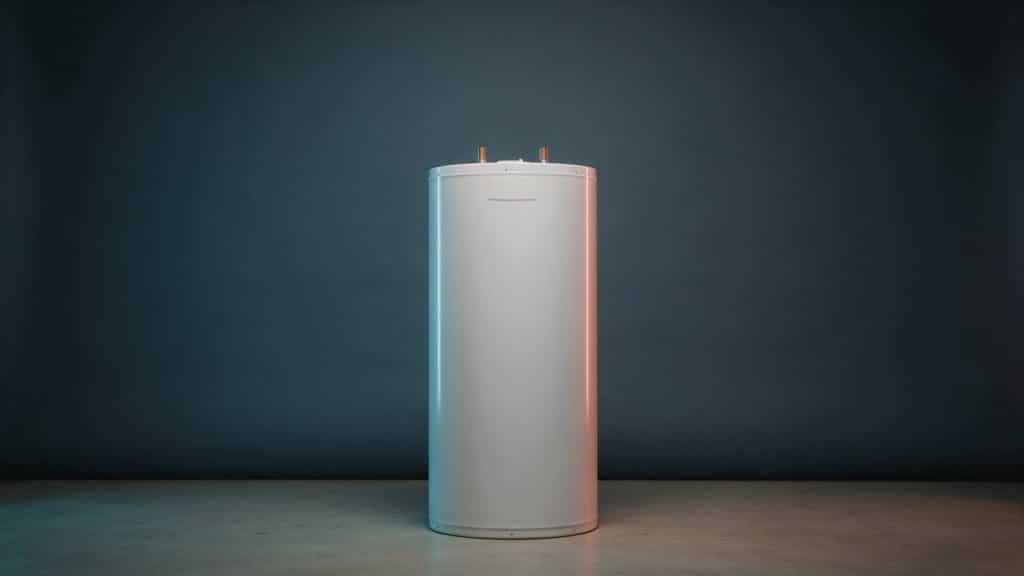
The best electric water heater is not one machine. It is three different machines wearing the same plug, and the right pick depends on whether your panel has room to spare, whether the closet has air to give up, and whether you are heating one sink or a whole house. A list that hands you a single winner skipped that question, and most of them do.
What can be ranked is fit, not a badge. No public failure database exists for any of these appliances by brand or by model, the same gap I laid out in the piece on water heater brands, so the honest ranking sorts by household, not by the name on the tank. This page works through the three electric options on the market right now, a plain resistance tank, a hybrid heat pump tank, and a whole-house electric tankless unit, and prices all three against the same household so you can see exactly where each one wins and where it does not.
The short answer
- All-electric house with a utility room, garage or unfinished basement that never drops below 40 °F: a hybrid heat pump tank. It runs about $194 a year against $739 for a plain resistance tank, and nothing else in an all-electric house gets close.
- A panel already near its limit, or a dead tank you need replaced by the weekend: a plain electric resistance tank. It is the cheapest of the three to buy and asks nothing extra of the house.
- One remote bathroom, a garage sink, or an addition the main line never reached: an electric point-of-use unit under that one fixture, not a whole-house replacement.
- A small household in a warm climate with a panel that genuinely has room to spare: whole-house electric tankless can work here, because a 45 °F rise needs far fewer kilowatts than a 70 °F one does.
- A finished room someone lives in through the winter, with no spare heat to give up: think twice about the heat pump. Read the room note below before you put one in there anyway.
- Gas already runs to the house: stop here and run the numbers in gas versus electric instead, because gas usually changes the verdict completely.
How to pick the best electric water heater: three machines, one panel
A plain resistance tank makes heat the simplest way there is: electricity runs through an element and every watt becomes heat, one for one. That heat sits in a tank, which is a buffer. Two showers back to back draw down the stored hot water and the tank recovers on its own schedule, with the elements running the whole time demand is high. It is the appliance most electric houses already have, which is why it is also the appliance with nothing new to ask of the panel.
A hybrid heat pump tank keeps that same buffer but changes how the heat gets made. A compressor pulls warmth out of the surrounding air and moves it into the water, the way a refrigerator moves heat the other direction, and it can deliver three and a half units of heat for every unit of electricity it draws. The catch is the air. Pull heat out of a small, sealed closet long enough and the compressor runs out of warmth to work with, which is why the unit carries backup resistance elements for a cold room or a demand spike, and why those elements quietly turn a heat pump’s running cost back into a resistance tank’s for as long as they are the ones working.
A whole-house electric tankless unit throws away the buffer entirely. There is no tank, so every gallon has to be heated the instant it is called for, and that is a question of raw kilowatts. The arithmetic is kW = GPM × rise × 0.1465, and I have worked it through in full in electric versus gas tankless: two showers at once, 5 GPM at a 70 °F rise, wants 51 kilowatts, more than any house circuit offers. The largest whole-house electric tankless units sold top out around 36 kW, which at that same rise caps you at about 3.5 GPM, one decent shower and nothing else running. A tank, resistance or hybrid, never has that ceiling, because it spent the last several hours building a reserve instead of trying to keep up in real time.
Side by side
| criteria | HYBRID HEAT PUMPtank, UEF 3.5 | RESISTANCE TANKstandard, UEF 0.92 | ELECTRIC TANKLESSwhole house, 18 to 36 kW |
|---|---|---|---|
| Running cost per year | $1941,143 kWh at $0.17cheapest | $7394,348 kWh at $0.17 | $6944,082 kWh at $0.17 |
| Ten-year energy | $1,940site model | $7,390site model | $6,940site model |
| Equipment price | $1,500 to $2,40050 to 65 gallon units | $550 to $90050 gallon tankcheapest to buy | $500 to $900the box alone |
| Flow at a 70 °F rise | Tank bufferfirst-hour rating, not a ceilingno limit on a short draw | Tank bufferfirst-hour rating, not a ceiling | 1.8 to 3.5 GPMcapped by the largest unit sold |
| What the house needs first | Air and warmtharound 1,000 ft³ per ENERGY STAR | A dedicated circuitusually already there if a tank is | Large electrical capacitythe constraint most older panels fail |
| Expected lifespan | 10 to 15 yrsthe compressor is the wear part | 8 to 12 yrstank corrosion sets the clock | 15 to 20 yrsscale on the elements is the clocklongest on paper |
Room and panel both available? Hybrid heat pump, and the running-cost gap pays for the higher price tag inside the decade. Panel already full, or need it fast? A resistance tank costs less and asks nothing new of the house. Want to skip the tank entirely? Whole-house electric tankless works only if the panel has real capacity to give, and the flow ceiling is the trade.
The $545 gap, and the one nobody prices right
Start from the heat, not the appliance. The household this site models draws 64 gallons a day at a 70 °F rise, which is about 4,000 kWh of heat that has to land in the water every year no matter which of these three makes it. Divide that number by the appliance’s efficiency to see what the meter actually records. A hybrid at UEF 3.5: 4,000 ÷ 3.5 is about 1,143 kWh, or $194 a year at $0.17 a kilowatt-hour. A resistance tank at UEF 0.92: 4,000 ÷ 0.92 is about 4,348 kWh, or $739. The gap between those two, $545 a year and $5,450 over ten, is the widest running-cost spread in a domestic appliance, and I have given it a full page of its own in heat pump versus electric water heater.
The tankless number is the one most people guess wrong. At UEF 0.98, a whole-house electric tankless needs 4,000 ÷ 0.98, about 4,082 kWh, or $694 a year, cheaper than the resistance tank but nowhere near the heat pump. That is not a different kind of electricity. It is the same one-for-one element, just without a tank sitting around losing a little warmth all day. Skipping standby loss is worth $45 a year here. Skipping the compressor is worth $545. Anyone shopping tankless for the efficiency sticker on the box is chasing the smaller number.
What the panel decides before the price does
A resistance tank and a hybrid tank both run on the same kind of dedicated circuit most houses already have, because odds are good a tank sat in that spot before. A whole-house electric tankless is a different animal. It wants to put the better part of a modern kitchen’s worth of load through a cable, continuously, for as long as someone is in the shower, and a surprising share of American houses were wired before anyone expected that. A heat pump unit may also need panel capacity for its own circuit, though a far smaller one than a whole-house tankless asks for. None of that is a number I will hand you. What your panel can actually spare is a question for a licensed electrician, and it is worth asking before you fall for a tankless unit’s low price tag, not after the delivery truck leaves.
Where this verdict is wrong
I would not put a whole-house electric tankless in a cold-climate house with an average panel, because the flow ceiling and the running cost both work against it at once. But in a warm climate, for one or two people, with a panel that genuinely has room, it stops being a compromise. A 45 °F rise instead of 70 °F buys roughly 55 percent more flow from the same kilowatts, the $694-a-year figure above shrinks with a smaller household’s usage, and you get no tank, no flue and no condensate drain to maintain. Run your own gallons and your own rise before you take the model household’s verdict as yours.
The honest answer on reliability is that nobody has one. No public failure database exists for any water heater by brand or by model, so a durability ranking you read anywhere, mine included, is somebody’s local sample dressed up as data. What the warranty ladder and the lifespan ranges above represent is the closest thing to evidence on the market, not a guarantee for the unit in your closet.
Sources
- US Department of Energy, Federal Energy Management Program, “Purchasing Energy-Efficient Residential Electric Storage Water Heaters”: efficiency factor range for electric resistance storage units.
- The modeling assumptions published on the method page: delivered-heat anchor, prices, UEF bands and equipment ranges.
Check the panel and the closet before you check a price. Between a resistance tank, a hybrid heat pump and a whole-house electric tankless, the cheapest one to run is rarely the cheapest one to buy, and the cheapest one to install is rarely the cheapest one to run. Every figure on this page comes from the same household and the same assumptions, laid out in full on the method page.